Showing posts with label beat analysis. Show all posts

June 21, 2018

Mapping Story Beats With Penguins

My new book Beating the Story: How to Map, Understand and Elevate Any Narrative examines the building blocks of storytelling, with a particular emphasis on emotional rhythm. Masterful narratives hold our attention by regularly but unpredictably oscillating our response to events between up notes, in which we are moved toward hope, and down notes, in which we fear a disastrous or negative outcome. The beat analysis system, first seen in Hamlet’s Hit Points and expanded in Beating the Story to address the needs of fiction writers in general, allows you to break down and enhance the moment-by-moment flow of any piece. As your needs dictate, this can assist you when you outline or rewrite your own work, or when you comment on or analyze someone else’s story.
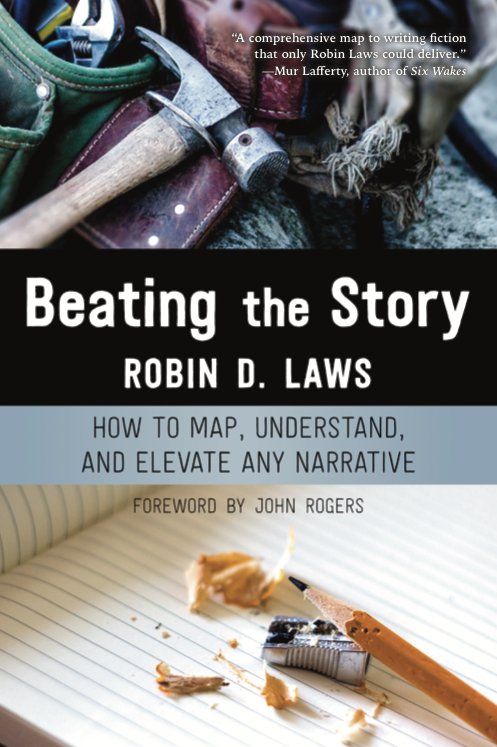
The sample narratives mapped in the book, including classic episodes of “Mad Men” and “The X-Files,” come from the world of fiction.

However, non-fictional storytelling works the same way. Everything from TV news reports to books of history, memoir, and journalism likewise hold our attention with a varying emotional rhythm. Documentary films and television do the same.

No more gripping manipulation of emotional rhythm can be found in the non-fiction realm than in the various BBC nature documentaries featuring the compelling vocal quaver of revered naturalist Sir David Attenborough.

An particularly acute example occurs as the final set piece in episode I of “Planet Earth II.” You can find the show on Netflix in many territories. If you’d like to follow along, this sequence starts at the 41:40 mark.

With the help of the free Beating the Story beat mapping tool, let’s break down the sequence.

All but one of the beats we’re about to look at are procedural, in which our viewpoint characters tackle practical, external obstacles. The penguins we are encouraged to identify with face such practical challenges as hunger, crashing waves, and predators.

1) The sequence begins with an intro shot of Zavovdovski Island. The shot’s framing, coupled with the score, emphasize how majestic and impressive this remote location is. Though the sequence hasn’t yet posed a question to orient us in hope or fear, the glorious 4k scenic grandeur nonetheless registers as an up note.

2) But then Attenborough informs us that it’s surrounded by the stormiest of seas and is an active volcano. We’ve seen enough of this nature series already to know that whatever lives here is going to face a struggle for survival. We don’t know what creature we’re worried about, but we have cause to worry. That gives us a down note.

3) With an upturn in the Attenboroughian voice, we see that we’re following the exploits of chinstrap penguins. Who doesn’t love adorable, physically expressive penguins? An up note.

4) We’re told that they have plenty of food. An up note.

5) But to exploit it penguins have to risk their lives. A down note.

6) We watch the plucky penguins get knocked around by the high waves that lash their island’s rocky shore. A second down note.

7) But they seem kind of adept and skillful as they dive off the rocks, although the narration tells us that “life here is dangerous and extreme.” This ambiguous beat plays both ways, with both up and down elements.

8) Cut to: a bucolic shot of the colony. There are benefits, we learn, to living on a volcano. An up note.

9) The lava’s warmth melts snow, we are told. That sounds encouraging—an up note.

10) The warmth brings life. The island is covered in chicks. An up note.

11) We witness a scene of parental care, a moment sure to tweak our sympathy and anthropomorphizing impulses. This up note intensifies our identification with the penguins.

12) But the two chicks we’re focusing on are hungry and waiting for father to return with next meal. This introduces the prospect of fear—what if he doesn’t come back? A down note. The implicit question in any Planet Earth scene is “will this animal we’re being shown survive?” This beat sharpens the sequence’s central question to the more specific “will the father return to feed the chicks?”

13) Cut to the sea: some of the fathers are being eaten by predatory birds called skewers! Bloody penguin flesh in gull-like beaks can only mean a down note.

14) The skewers also harass the colony, flying over it in search of vulnerable chicks. Another down note. The earlier sequence of three consecutive up beats has now been canceled out by as many down beats.

15) As if our avuncular naturalist senses the fear he’s instilled in us, and knows we need an up beat, Attenborough assures us that everything will be fine—

16) —if father comes back soon. Hey, the narrator got our hopes up only to wrench them down again!

17) A shot of the empty sea, accompanied by sad music, delivers another down note.

18) The father penguin surges through water in heroic slow motion, coming to the chicks. An up note.

19) In this narration, the conjunction “but” often signals a turn toward fear. But, we are told, the worst of the journey is still to come.

20) In another fearful moment, a mass of struggling penguins tries to get back up rocks as crashing waves pull them back down.

21) The poor penguins clamber over each other. Another down note.

22) But our hero penguin, the one we’ve been primed to particularly care about, uses his tiny claws to overcome. An up note.

23) He’s up and hopping onto the land. Another up note.

24) But we see another penguin dad covered in blood, and feel his pain. A down note.

25) Our hero has 3 km to go and is loaded down with food. As we see the enormity of his task, we fear for him—another down note.

26) Oh no, we see, this, the largest penguin colony, is dauntingly huge in scope. A down note.

27) But he does this every other day, we are told. Here the “but” again signals a reversal in emotion, but this time reversed, from a previous down note to this up beat.

28) He has trouble finding his nest. A down note.

29) The mother waits, her chicks desperate. A down note.

30) The father recognizes the mother’s cry—salvation is at hand, and we get an up note.

31) He scares off a skewer, for a particularly triumphant up note. (Belay that cynicism. This can’t possibly be a shot of some other random penguin we don’t care about putting the boots to that skewer. Nature documentaries would never play games with us like that. We can totally tell our chinstrap penguin from all the countless others.)

32) At last, mother and father greet each other, for the up note that accompanies any reunion of the central couple.

33) He feeds the chicks. The question “will the father penguin feed his chicks” is answered in the affirmative, for a resounding up note.

34) The couple exchanges a head bob of acknowledgment. Here, in a nature documentary, we get a dramatic beat, in which one character (the petitioner) seeks an emotional response from another (the granter.) The father receives this affirmation from the mother, making this emotional exchange an up note.

35) Now it’s mother’s turn to go get food, so off she goes. We worry for her but are encouraged by Attenborough’s delivery to accept this as a necessary fact of chinstrap penguin existence. You might score it as an up beat, but I’m gonna call it a crossed beat, because I just saw what Dad had to go through.

36) These majestic penguins have it all, the voice-over indicates, as the piece begins its wrap up.

37) This segues into a general paean to islands, concluding the episode on a final up note.

In a ten minute span, that’s thirty-seven beats of intense anthropomorphic emotion, as finely calibrated as any suspense sequence in Hitchcock’s oeuvre.

Narratives, with the ups and downs that keep us riveted, are all around us.

Learn to decode this basic dynamic with Beating the Story: How to Map, Understand and Elevate Any Narrative, from Gameplaywright.

Available at Amazon, Amazon Canada, Amazon UK, and in all digital formats at DriveThru RPG,. Or ask your friendly hobby games store to order it through Atlas Games.

February 05, 2018

Beating the Story: Narrative Mapping in Practice

Beating the Story is my new book of practical storytelling techniques, now on pre-order from its publisher, Gameplaywright. It provides a system allowing you to, as its subtitle says, map, understand, and elevate any narrative. This approach breaks moments down into key types, the most important being dramatic beats of personal interaction and procedural beats in which characters overcome external obstacles. It lets you mark the flow of information with other beat types: pipe, question, and reveal. The system also encourages you to note the presence of oddball flourish beats, like strong spices, register most satisfyingly when used sparingly: commentary, bringdown, gratification, and anticipation.
(You may be familiar with these concepts from Hamlet’s Hit Points, which gears itself to the needs of roleplaying GMs and designers.)
Thanks to convenient timing, I happen to be working on a novel that I developed using the system shown in Beating the Story just as we are making the book available for pre-orders. This gives me the chance to discuss the translation of its tools and principles to an actual writing process.

The novel, called The Missing and the Lost, is part of the initial release of books for Pelgrane Press’ The Yellow King Roleplaying Game. We crowdfunded the project through a Kickstarter last summer and remain on track for our December 2018 release date. The novel features a character who first appeared in a short story in my original fiction collection New Tales of the Yellow Sign.
The first draft isn’t done yet, so it’s way too early to be giving away anything that might be construed as a spoiler. For both the examples given here and the above sample illustration, I’m either changing details or talking about them vaguely.
I’m now two-thirds of the way through the initial draft, give or take. At present the story map, as created on storybeats.io, consists of 159 beats. Twelve of them appear in the illustration here.
It also allows you to test the power and appropriateness of your shifts between scenes with transition icons, each with its own impact on pacing.
For this project I’ve been using the beat map as my only outline. This choice has given me the structure required for a genre novel in which several parallel threads eventually converge, and the flexibility to easily improve the interweaving while I write.
The graphic presentation, abetted by the ease of moving elements around with the storybeats.io tool, has enabled me to keep the various threads of the multi-threaded storyline active over the course of the narrative.
The map excerpt here shows the novel’s opening. The icons tell me that I’m hitting my desired mix of emotional and problem-solving moments.
This first-person novel follows a single viewpoint character throughout. The domino effect of scenes tumbling out of one another has yet to kick in, so the smaller transition icons you see are all Continuations—shifts featuring the same character but not in an Scene A causes Scene B sort of way. Later on Outgrowth transitions come to dominate.
During the draft process I’ve been revising the beat map continually. The writing of a scene may suggest more moments that rise toward hope or drop toward fear and ought to be included on the updated map. As characters flesh out on the page and become richer, I’ve discovered the need for additional dramatic moments in which they address obvious conflicts arising from my execution of particular sequences.
In a couple of instances I’ve spotted ways to stoke momentum by making previously disconnected scenes flow directly into one another, as marked by Continuation transitions.
In one instance the beat map allowed me to spot an opportunity to excitingly connect two previously disparate scenes by having a character in scene A provide a reason for the protagonist to initiate scene B with another supporting character.
Checking the overall narrative line with the web app, I can see that it fits the pattern of most satisfying narratives—a modulated but gradually downward line.
Overall the beat map process encourages you to think about key moments, their purpose in the story, the impact you intend them to have, and how they can best be threaded together.
Preorder Beating the Story today, get it in electronic form immediately, check it out, and then head over to storybeats.io to turn practical theory into creative action.


March 27, 2012

Disorienting Exposition

In fiction set in unfamiliar times and places, it often falls to the author to explain details of the world well-known to the characters but not to the reader. How straightforwardly to lay this out is a matter of style, and therefore taste. I tend to want to deliver it in a compact way and get on to the story it’s supporting. Some readers prefer obscured approaches that take longer but don’t necessarily signal themselves as expository—world detail through dialogue being a key technique.

A more complex technique presents expository detail about the world as if addressing a reader already familiar with it. Most often you'll see this in SF novels. The narrator rattles off terms and describes situations without full explanatory context.

According to the beat analysis system found in Hamlet's Hit Points, these mystifying references serve as question beats. They arouse our anxiety and our curiosity, impelling us to read on, in search of clarification. As we figure out the world through additional context, we feel counterpointing up beats, when those questions are answered.

This might be seen as the SF version of a common literary fiction gambit, where details of the story being retold are teased but not fully laid out. In both cases these can substitute for the basic building blocks of most fiction, dramatic and procedural scenes.

How much one digs this is another matter of taste. Personally, I prefer to be invested in a character, to hope for her success and fear for her failure, before I’m asked to puzzle through an alien future. Other readers might be perfectly happy with pure world extrapolation, without all that pesky story and character always rearing its head.

October 06, 2011

Hillfolk Characters and Their Dramatic Poles

As an example of the sorts of characters you’ll play in Hillfolk, the first DramaSystem game, here’s the roster from the in-house playtest. They are stalwarts of the Horsehead clan, highlands-dwelling raiders at the dawn of the Iron Age.

The most important element of any DramaSystem PC are her dramatic poles—the two contradictory emotional impulses she’s torn between.

Redaxe (played by Paul) is the clan’s bad-ass war champion, a confident berserker with axe in hand, but an often confused man in the confusing realms of love and politics. Poles: man of peace vs. man of war

Thickneck (Justin), Redaxe’s brother and the clan’s most accomplished shepherd. His desire for himself and the clan is tranquility; so far, events have given him little of it. For the first season, he served as self-appointed conscience and advisor to the chieftain. Now he is the chieftain. (He’s also for the moment become a GM-run recurring character, as Justin has had to bow out for the fall semester.) Poles: ambition vs. loyalty.

When we first met Twig (played by Lisa) the clan’s willowy young hostler, her lack of confidence led her to seek the approval of others. She started out as Redaxe’s girl, then realized her true feelings were for Thickneck. As last season closed, her confidence issues seemed to disappear, as she sought power for herself and Thickneck. For the first season, her poles were conformity vs. adventure. Now, as she becomes more political and materialistic, she’s shifted to selfishness vs. altruism.

Skull (Christoph) was, for the first season, the brash and maneuvering village headman, who by fits and starts negotiated the Horsehead clan into vassal status with the northern kingdom, only to be set aside by King Goldenthrone. Skull’s search for a new place after losing his authority will doubtless drive much of season two. During the first season, Christoph expressed his poles as assimilator vs. protector. As GM, I would have asked him to adjust these to something more personal and less abstract—were he not in practice playing the more gripping set of poles: arrogance vs. wisdom. In his new renegade state, his poles have shifted to vengeance vs. the people.

Farhawk (Chris) is a young firebrand, and a burr in the saddle of the other main characters. His father, headman of the defunct Lavender clan, was slain by Redaxe, who has sworn to train Farhawk in the art of combat, so they can fairly fight to the death later. Though generally distrusted and disregarded, Farhawk may have the keenest political instincts of any Horsehead. His poles: becoming a Horsehead vs. destroying the Horseheads.

Chris started out playing Roll-the-Bones, the clan’s wise woman. But after she proved dramatically inert—her sole tactic in dramatic scenes was refusal—he was dragooned into playing the powerfully double-edged Farhawk, first introduced as a recurring character (an important NPC.) Roll-the-Bones then became a recurring character, where her obstructionism suits her for the role of nemesis.

September 30, 2011

Classic Post: Dramatic Poles

I’ve talked before about the iconic characters and how they are driven by an ethos. By recapitulating it, they triumph over external obstacles, affirm their selfhood, and restore order.

But what drives dramatic characters?

When we care about a fictional character, we hope for X and fear for Y. X is the positive condition; Y is its opposite. In a procedural, we hope the character will succeed in reaching his procedural goals and fear that he will fail. In a drama, we perceive a positive and a negative potential. We want the character to reach the former and avoid the latter.

Compelling ongoing dramatic characters possess dual natures, or internal oppositions. We want them to overcome one of these and realize the other. Another way to express this is to say that the characters are torn between two internal forces or impulses. These are the poles of a dramatically active character.

  • Rick Blaine (Casablanca) selfishness or altruism?

  • Shelley Levene (Glengarry Glen Ross) winner or loser?

  • Nora (A Doll’s House) subservience or selfhood?

  • Tony Soprano: family man or Family man?

  • Nate Fisher: (Six Feet Under) freedom or responsibility?

  • Frank Gallagher: (Shameless US) dissolution or dignity?

  • Walter White (Breaking Bad) virtuous weakness or anti-social power?

Our feelings toward the two poles may be clear-cut, or divided. Dramatic characterization deepens, and our reactions to it become more complex, when our reaction to the dual nature becomes ambiguous. Part of us wants Tony to be the good family man, but part of us takes dark vicarious pleasure in his sociopathic side.